
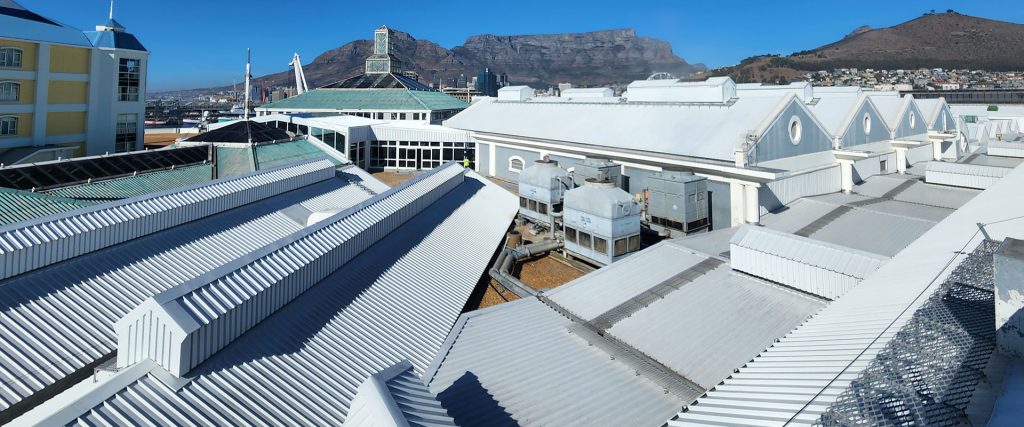
Metal roofing is one of the most widely used building materials across South Africa, offering durability, versatility, and long-term value when correctly specified. However, not all metal roofing materials perform in the same way.
Incorrect material selection remains one of the leading causes of premature roof deterioration. This guide focuses on the core materials used in metal roofing, explaining how steel substrates, metallic coatings, and paint systems influence durability, corrosion resistance, and overall lifespan.
Understanding these fundamentals enables specifiers, contractors, and developers to make informed decisions at the procurement stage.
IT STARTS WITH THE STEEL
Most metal roofing products in South Africa are manufactured from cold-rolled structural steel coil. This steel forms the structural foundation of the roofing system and determines its strength and performance.
Sheet thickness is measured in Base Metal Thickness (BMT), which refers only to the steel substrate and excludes metallic and paint coatings.
Typical applications include:
- 0.47mm BMT for light residential use
- 0.53mm BMT for standard residential and light commercial use
- 0.80mm BMT and above for industrial and high-wind applications
- BMT directly influences rigidity, spanning capability, fatigue resistance, and long-term durability.
A thinner sheet may reduce initial cost, but it is more susceptible to deflection, installation damage, and early fatigue. Over time, this often results in increased maintenance and reduced service life.
Always confirm BMT when comparing quotations.
VERIFYING BMT ON STEEL COILS
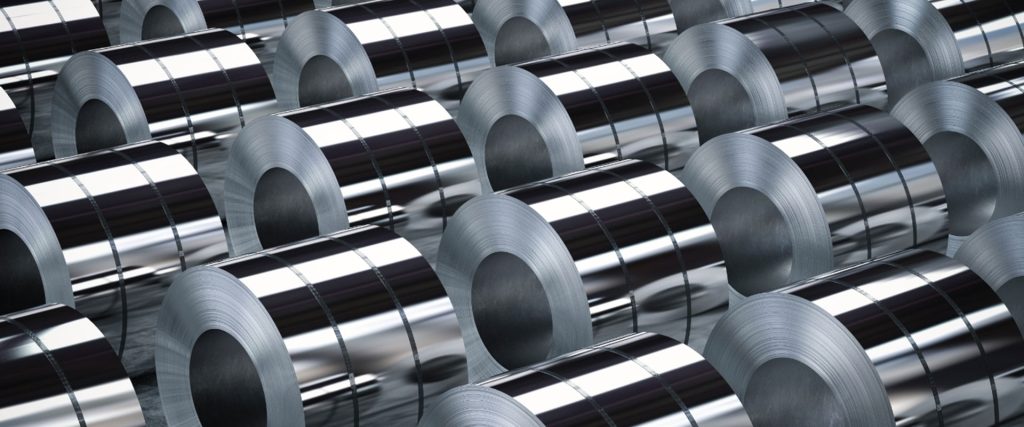
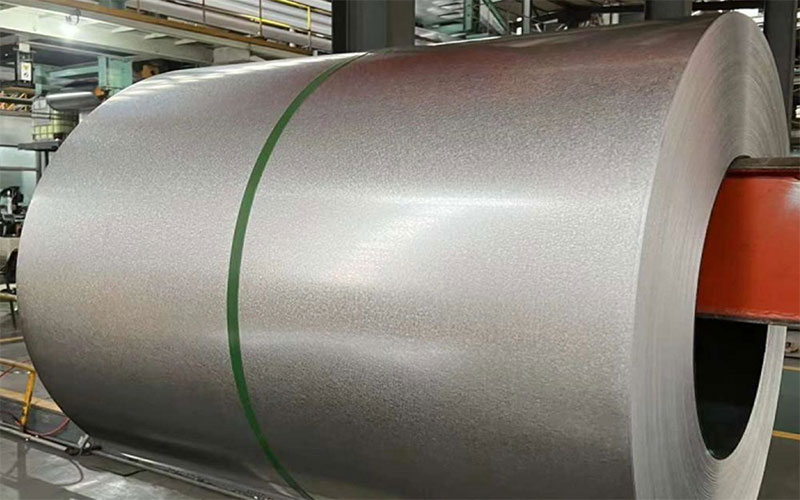
Roofing material is supplied in coil form before it is roll-formed into profiles. Each coil is marked by the manufacturer with production data that ensures traceability and compliance.
Typical coil markings include:
- Brand and product name
- Total Coated Thickness (TCT)
- Base Metal Thickness (BMT)
- Metallic coating class (AZ or Z rating)
- Product quality standard
- Coil number
- Date and time of production
BMT reflects the actual steel thickness.
TCT reflects the total thickness, including steel, metallic coating, and paint system.
Understanding this distinction is critical when verifying supplied material. Reputable suppliers use coil markings to confirm compliance with specifications before profiling and dispatch.
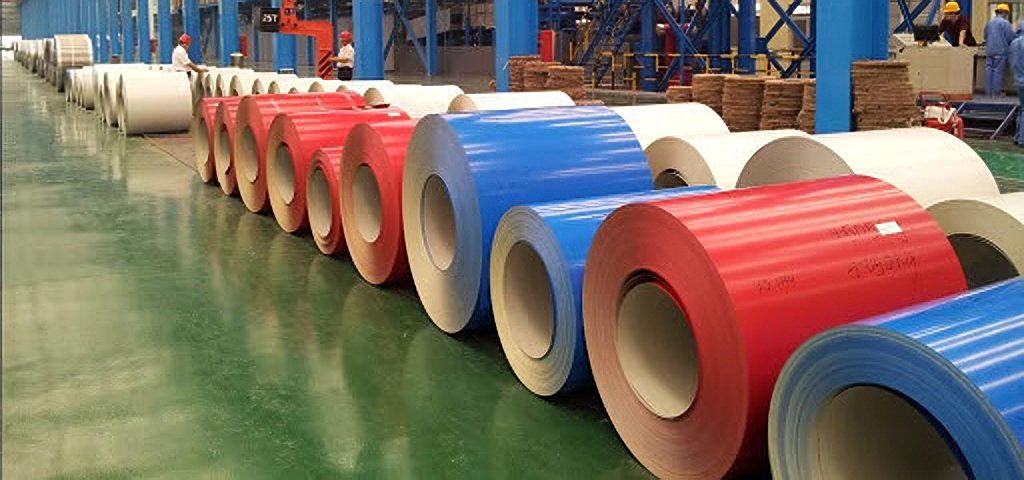
METALLIC COATINGS: GALVANISED VS ZINCALUME VS ZINCAL
The steel substrate is protected by a metallic coating that provides corrosion resistance. The most common coating systems used in South Africa include galvanised and aluminium-zinc alloys.
Galvanised (Z275)
Galvanised steel is coated in pure zinc at 275g per square metre. Zinc provides sacrificial protection, meaning it corrodes preferentially to protect the steel.
Galvanised products perform adequately in dry inland environments but deteriorate more rapidly in coastal and high-humidity regions.
Zincalume and Zincal (AZ150)
Zincalume and Zincal use an aluminium-zinc alloy coating consisting of:
- 55% aluminium
- 43.5% zinc
- 1.5% silicon
The aluminium forms a durable barrier layer, while the zinc protects exposed edges and cut surfaces. Field performance shows that AZ150 products typically deliver two to four times the service life of galvanised steel under comparable conditions
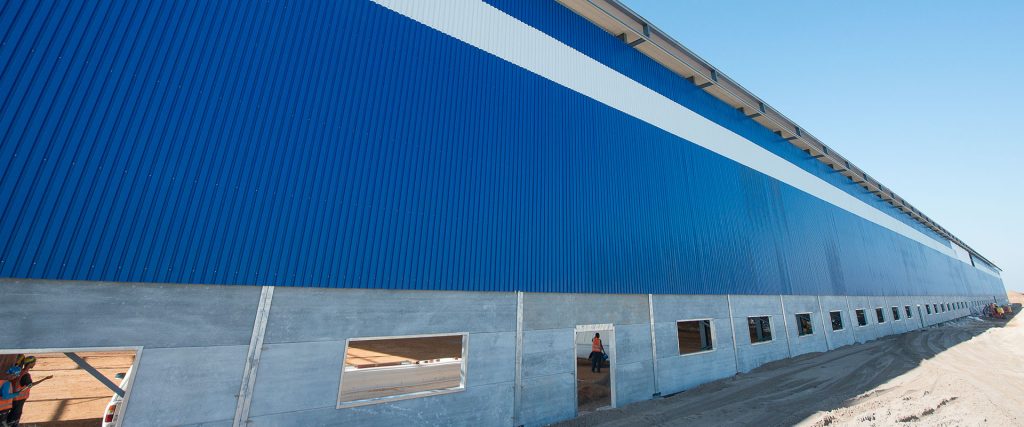
PAINTED ROOFING MATERIALS: COLORBOND®, COLORPLUS®, AND CHROMADEK®
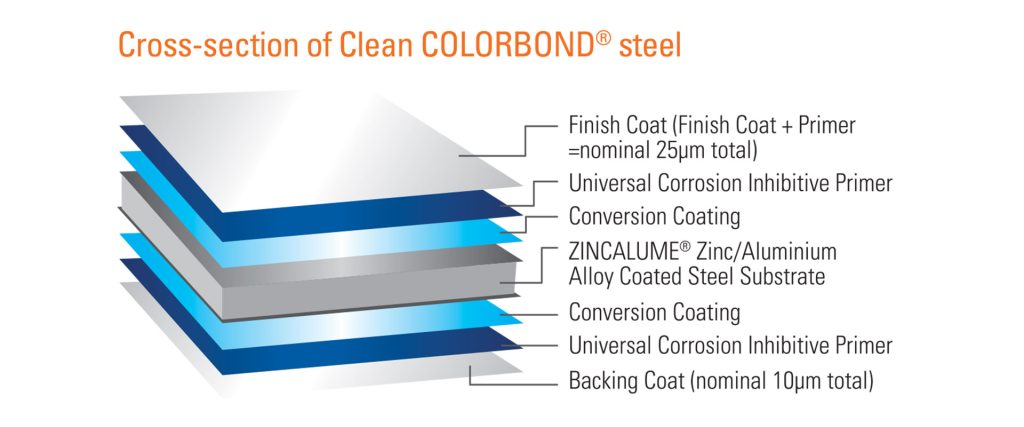
Painted roofing products combine a metallic-coated steel substrate with an advanced paint system. The paint layer enhances corrosion resistance, colour stability, and surface protection.
CLEAN COLORBOND®
Clean Colorbond® is manufactured using AZ150 substrate and BlueScope’s proprietary paint technology. It features multi-layer coatings designed to resist fading, chalking, and the build-up of pollutants.
It is widely used in residential and commercial applications.
COLORPLUS®
ColorPlus® is Safal Steel’s painted roofing product, developed specifically for South African environmental conditions. It combines AZ150 or AZ200 substrate with a high-performance paint system, offering enhanced reflectivity and long-term colour stability.
CHROMADEK®
Chromadek is a pre-painted galvanised steel product. It uses a zinc-coated substrate with a paint finish applied during manufacture. While suitable for certain inland applications, it generally offers lower corrosion resistance than aluminium-zinc-based painted products in coastal environments.
Understanding the substrate beneath the paint system is critical when comparing painted roofing materials.
AZ150 VS AZ200: COATING MASS AND DURABILITY
AZ classifications refer to the mass of aluminium-zinc coating applied to the steel.
AZ150
- Minimum coating mass: 150g/m²
- Suitable for inland and general coastal conditions
- Widely used in residential and commercial construction
AZ200
- Minimum coating mass: 200g/m²
- Provides increased corrosion resistance
- Specified for severe coastal and industrial environments
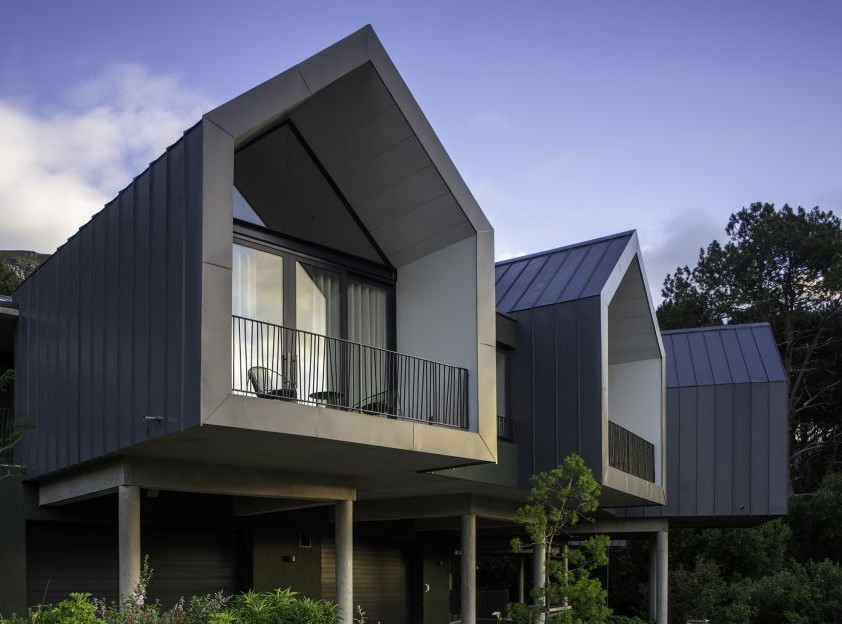
Projects located within 100 to 200 metres of open ocean exposure should generally specify AZ200 systems. Wind direction, salt loading, and building height should also be considered.
Where exposure conditions are uncertain, upgrading to AZ200 is recommended.
PRODUCT COMPARISON OVERVIEW
| Product | Substrate | Best Use | Coastal Suitability |
|---|---|---|---|
| Zincalume® | AZ150 · Aluminium-zinc alloy | Industrial, agricultural, commercial | Moderate |
| Zincal® | AZ150 · Locally produced | Industrial, agricultural, commercial | Moderate |
| Clean Colorbond® | AZ150 + BlueScope paint | Residential, commercial | Good |
| Clean Colorbond® Ultra | AZ200 + enhanced paint | Severe coastal, industrial | Excellent |
| ColorPlus® AZ150 | AZ150 + premium paint | Residential, commercial | Good |
| ColorPlus® Ultima AZ200 | AZ200 + premium paint | Harsh environments | Excellent |
| Chromadek® | Galvanised + paint | Inland residential, light commercial | Limited |
FROM COIL TO ROOFING PROFILE
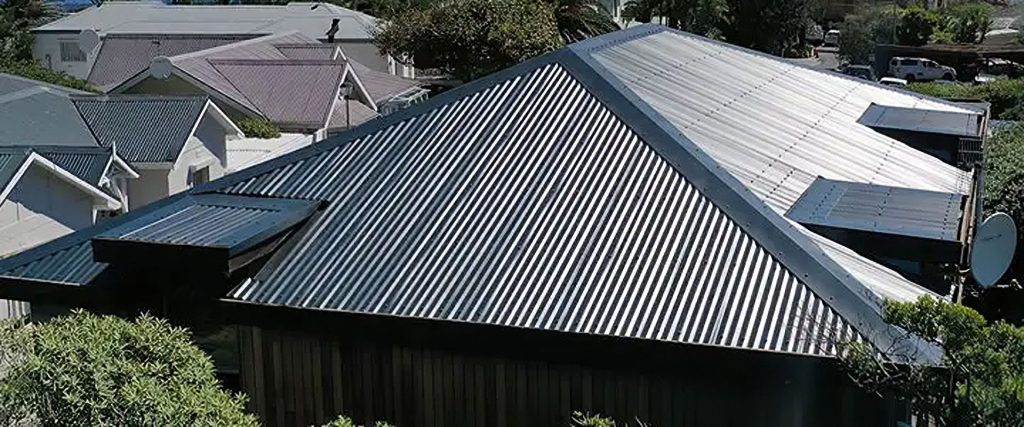
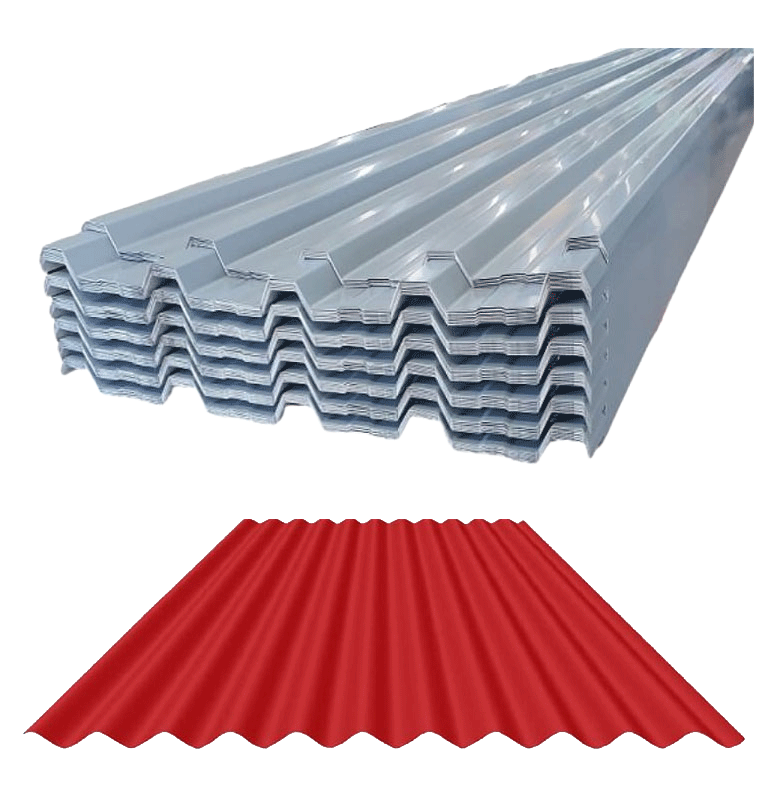
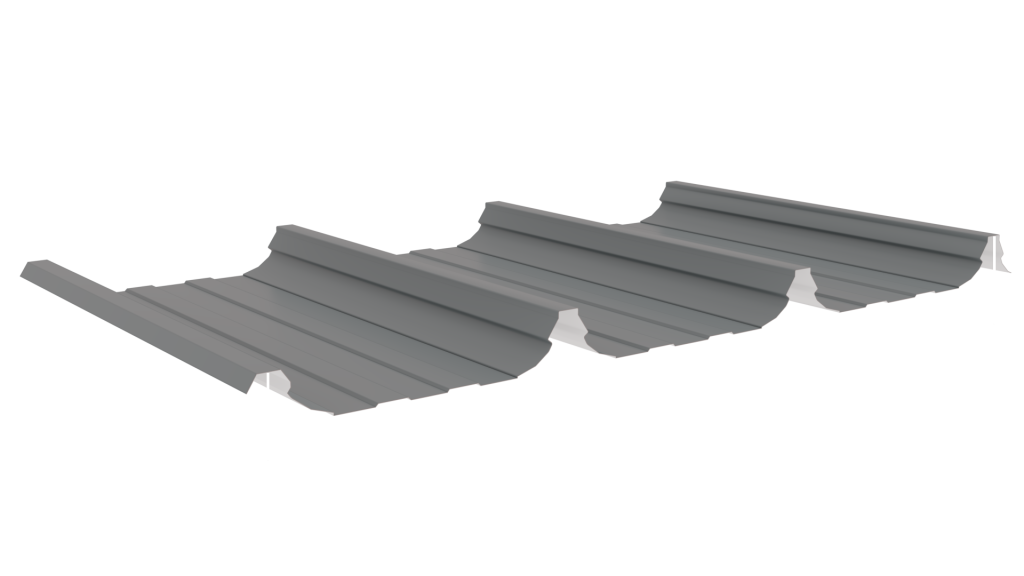
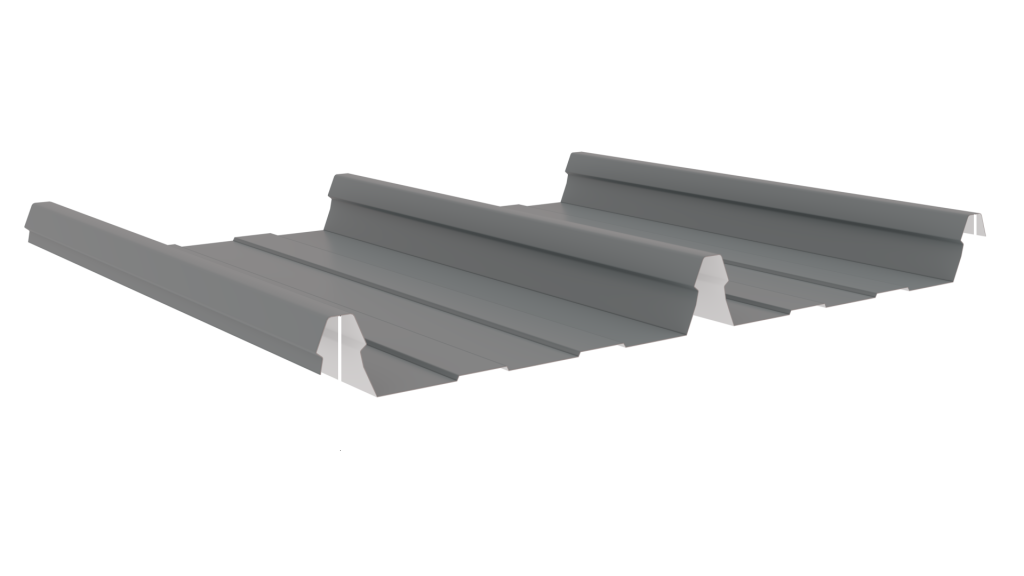
Metal roofing materials are supplied in coil form and are then roll-formed into a range of popular roofing profiles.
Depending on project requirements, these materials can be profiled into systems such as
- Corrugated
- IBR
- Widedek
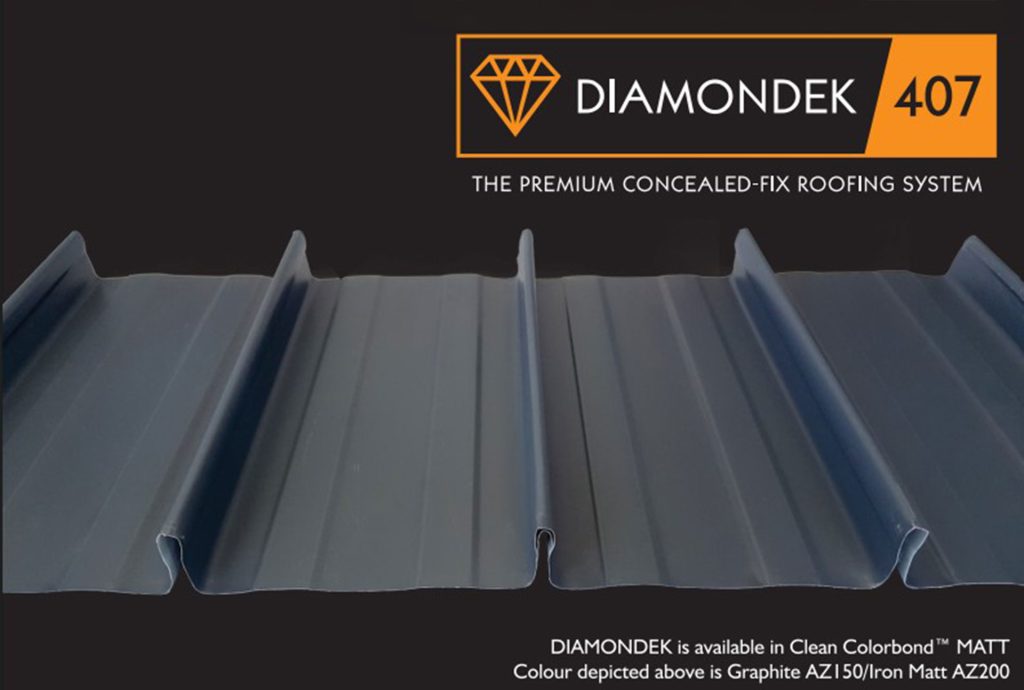
- Diamondek 407
- Diamondek 425
- Springlok 700
While profile selection influences drainage and structural performance, the roof’s durability is primarily determined by the underlying material specification.
MATCHING MATERIALS TO ENVIRONMENT
Correct material selection depends on environmental exposure.
| Environment | Recommended Material |
|---|---|
| Inland | AZ150 painted or unpainted |
| General coastal | AZ150 painted |
| Severe coastal | AZ200 painted |
| Industrial | AZ200 painted |
Professional exposure assessment is recommended for high-risk locations.
QUICK MATERIAL SELECTION CHECKLIST
- Confirm Base Metal Thickness
- Identify the metallic coating type
- Verify AZ classification
- Understand paint system performance
- Assess environmental exposure
- Compare substrates, not only colour or price
Metal roofing performance depends on selecting the correct material from the outset.
FREQUENTLY ASKED QUESTIONS
What does BMT mean?
BMT refers only to the thickness of the steel substrate. It affects rigidity, spanning capability, and long-term durability.
What does TCT mean?
TCT refers to Total Coated Thickness. It measures the combined thickness of the steel substrate, metallic coating, and paint system.
While BMT determines structural strength, TCT reflects the total protective system applied to the steel.
What is the main difference between Colorbond®, ColorPlus®, and Chromadek®?
Colorbond® and ColorPlus® are paint-based on aluminium-zinc substrates, offering superior corrosion resistance. Chromadek® uses a galvanised substrate and is generally better suited to inland environments.
How close to the coast requires AZ200?
Typically, within 100 to 200 metres of open ocean, depending on exposure conditions and wind patterns.
Is painted roofing always better than unpainted?
Painted products provide additional protection and colour stability, but performance depends on the underlying substrate.
Can different materials be used on the same project?
Yes, but consistency is recommended to ensure uniform performance and appearance.
TECHNICAL SUPPORT AND PROJECT GUIDANCE
Metal roofing materials form the foundation of long-term roof performance. Correct selection requires an understanding of steel grades, coating systems, paint technology, and environmental exposure.
Youngman’s technical team provides professional support across all branches with:
- Material specification guidance
- Environmental exposure assessment
- Compliance assistance
- Product recommendations
- Project quotations
Early technical involvement reduces risk, prevents costly errors, and ensures long-term building performance.
For project-specific guidance, contact your nearest Youngman branch.